Shopify vs WooCommerce vs Custom Ecommerce: Which Platform Fits?
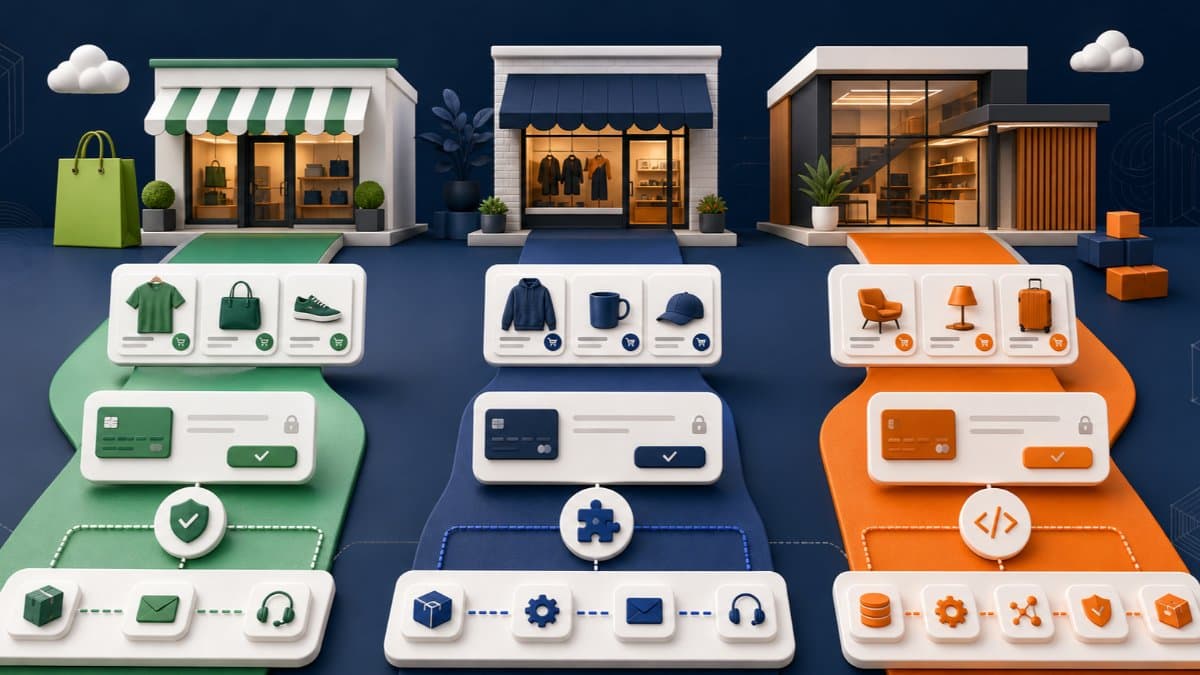
Shopify vs WooCommerce vs Custom Ecommerce: Which Platform Fits?
Choosing an ecommerce platform is an operating decision, not only a website decision. It influences launch speed, ownership, integrations, and how easily the store can evolve. Shopify, WooCommerce, and custom ecommerce can all be strong choices when matched to the right business model.
When Shopify fits
Shopify suits teams that value a managed platform and a fast path to market. Hosting, updates, core checkout features, and much of the operational foundation sit inside one ecosystem. Its apps and themes cover many common needs. Specialized workflows, however, may depend on apps, platform conventions, or higher-tier capabilities. Review transaction rules, subscriptions, data flows, checkout requirements, and international selling before committing.
When WooCommerce fits
WooCommerce works well for organizations comfortable with WordPress or those needing flexible content and hosting. It can combine editorial SEO pages and commerce in one adaptable environment. That control brings responsibility: hosting, updates, plugin compatibility, security, backups, performance, and monitoring need active ownership. Keep the extension stack lean and test updates carefully.
When custom ecommerce fits
A custom platform becomes valuable when the business model is difficult to express through standard tools: complex B2B pricing, approval flows, marketplace logic, specialized subscriptions, unusual product configuration, or deep operational integrations. It offers control over workflows, architecture, and user experience, but the organization owns security, reliability, releases, documentation, and maintenance. Custom development should solve a meaningful competitive problem rather than rebuild standard features.
Compare total cost
Include platform fees, apps, plugins, hosting, implementation, migration, integrations, maintenance, support, and internal time. Also count the cost of limitations such as manual work, disconnected systems, slow reporting, or an experience that cannot support the sales model.
Evaluate integrations and data
Map payments, shipping, inventory, ERP, CRM, marketing, analytics, and support. Decide which system owns each record, how failed updates retry, and how teams reconcile mismatches. Review export options and portability before dependency becomes deep.
Plan for performance and growth
Catalog size, traffic patterns, markets, promotions, and search needs matter. Growth also means more operators, permissions, reports, fulfillment exceptions, and service workflows—not only more visitors.
Choose Shopify when speed and managed operations matter most. Choose WooCommerce when content flexibility and hosting control justify active maintenance. Choose custom when unique workflows create enough value to support long-term product ownership. A short discovery exercise, integration map, and total-cost review can prevent a convenient launch choice from becoming an expensive constraint.